
Review · WHITE WATER RAFTING
Half Day Two Canyon Six Mile Creek Whitewater Rafting
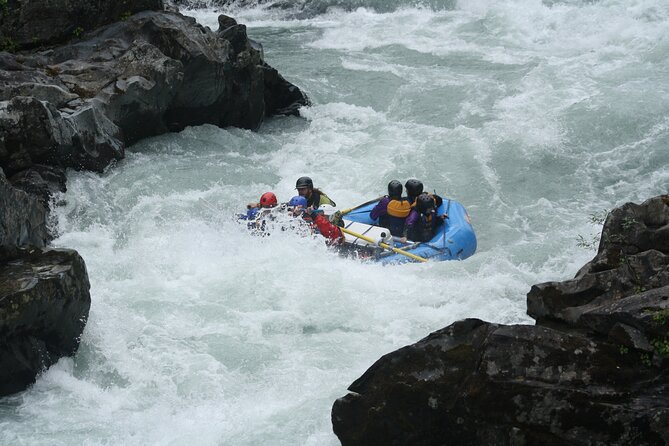
The main event here is not a gentle float through Alaska. It is a hard-charging run through Six Mile River, where Class IV and V rapids build in force as you pass through three narrow canyons. You may thunder past waterfalls, paddle under the direction of a guide, and look toward forest where black bears and wild deer can appear.
I like two things right away: the guides take the safety briefing seriously, and the setting gives you real wilderness rather than a manufactured amusement ride. I also like that you do not need rafting experience. The catch is equally clear: the water is about 38 degrees, the swim test is demanding, and dry suits have not always kept people completely dry.
Key points to know before you book
- The swim test is real: You must pass a paddler’s practice swim in cold, moving water before rafting.
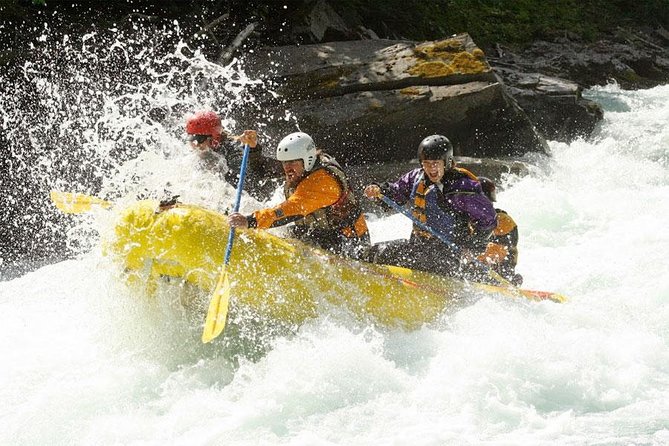
- The rapids reach Class V: The first two canyons offer major whitewater, while the third canyon can include several Class V rapids.
- You may be wet and cold: Bring a full change of clothing, and consider heavy wool socks even with provided river gear.
- Guides control the pace: Elliot, Spencer, and Neal are among the guides praised for calm instruction and keeping boats upright.
- The third canyon may cost extra: Some trips continue after two canyons, depending on conditions and your group’s willingness.
- This is a small, active outing: The maximum group size is 15, and you need good fitness and strong swimming ability.
Six Mile River is serious whitewater
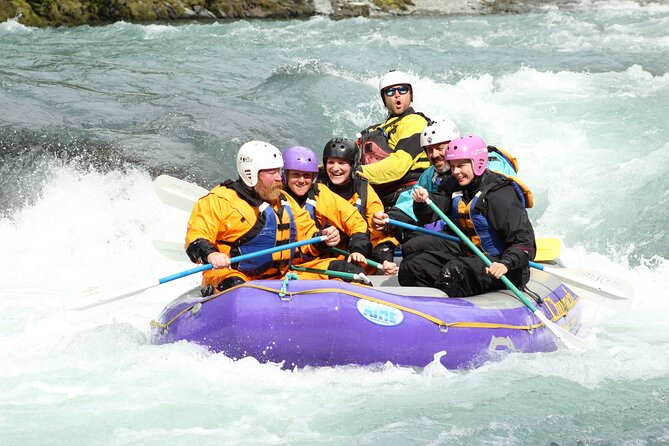
Six Mile River gives you a quick lesson in the difference between scenic rafting and technical rafting. The river cuts through three canyons, with rapids growing harder as you continue. Class IV water already demands teamwork and concentration. Class V adds a higher level of force, timing, and risk.
Your raft is not simply carried downstream. You are expected to paddle when instructed, brace yourself, and follow commands quickly. That makes the outing feel like a team effort. You are part of the boat’s movement, not just seated in a rubber craft while someone else does all the work.
The setting adds to the appeal. Forested banks frame the river, and black bears and wild deer are part of the possible scenery. You should not book this expecting a wildlife tour, since the water and rapids keep your attention most of the time. Still, the chance to move through a wild Alaskan river corridor gives the trip a strong sense of place.
The four-hour schedule includes preparation, river time, and a van ride back to the training facility. It is a half-day commitment, but it is a physically packed half-day. One person described finishing the first two canyons already exhausted and cold. That is useful information if you are planning another demanding activity later the same day.
More Half-Day Rafting Trips in the USA
- Half Day Whitewater Rafting Trip
★ 5.0 · 1,840 reviews - Half-Day Whitewater Rafting in Browns Canyon
★ 5.0 · 999 reviews - Durango Half Day Rafting Trip – Lower Animas River
★ 5.0 · 942 reviews
Arriving at the Chugach Outdoor Center
The meeting point is at 28069 Hope Highway, Hope, Alaska 99605, near milepost 7.5 on the left side of the Hope Highway. You begin at the rafting training facility, where you meet your guide and receive an orientation before entering the river.
The briefing matters here. Your guide explains what the river can do, what to expect if you leave the raft, and how to work with the boat crew. This is not a quick safety speech before a standard sightseeing ride. You are being prepared for cold water, strong current, and rapids that require immediate response.
Children must be accompanied by an adult, and the minimum age is 12. Every participant must be physically capable of passing the paddler’s practice swim. The operator also requires a strong level of fitness, so age alone does not determine whether this is suitable.
The group limit is 15 people. That is small enough for direct instruction, although your position in the raft can affect how active you are. Up to three people in a boat may not paddle, and positions do not necessarily switch. If you want constant physical involvement, ask how seating is assigned before you commit.
The swim test sets the tone
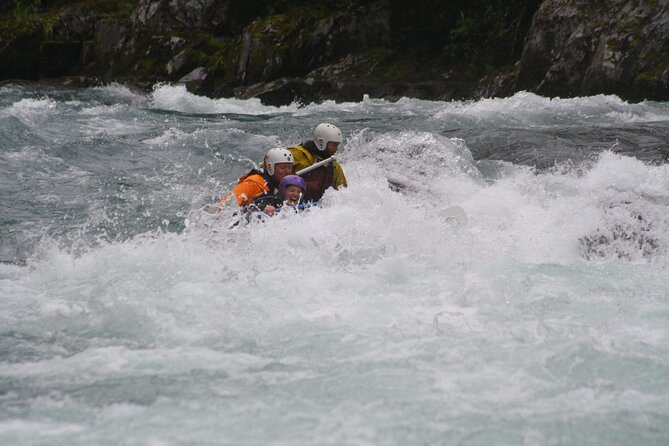
The practice swim is one of the most important details to understand. You enter the creek and swim against the current until instructed to turn onto your back, then continue toward the boat or shore. The water is about 38 degrees, and the swim can feel difficult even before the rafting begins.
This test is not a formality. One participant described swimming roughly 300 yards to reach the safety of the boat, while another found the cold and current genuinely intimidating. A 13-year-old in one group became overwhelmed after the swim and did not continue to the canyon section.
That does not mean you need to be an elite swimmer. It does mean you should be comfortable in cold water, able to follow instructions under stress, and fit enough to swim against current. If the thought of that test makes you uneasy, take it seriously rather than assuming the guide will overlook it.
The swim also gives you an honest preview of the outing. If you are already shivering, frightened, or exhausted before the first rapid, continuing may not be wise. The guides explain the demands clearly and give people a chance to opt out.
Gear is included, but pack for leaks
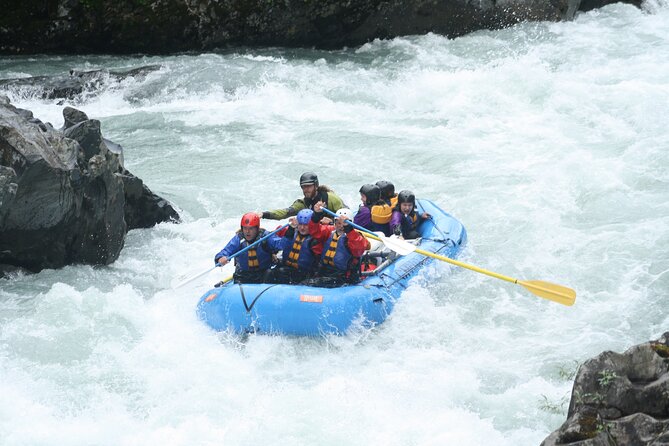
The price includes a helmet, personal flotation device, river shoes, and a dry suit. You also receive professional guiding, hot drinks, hot showers, and access to a hot tub after the river. Those warm-up facilities are valuable because cold is not a minor concern on this trip.
The dry suits have received mixed practical feedback. Some people stayed reasonably dry, but others had water enter through the suit or sock area almost immediately. One pair found their suits leaking from the first swim, leaving them wet from the waist down and increasingly cold as more river water entered.
Pack as if the dry suit might not be fully waterproof. Bring a complete change of clothes, including underwear and socks. Heavy wool socks are a smart choice, based on the cold-weather problems described by previous participants. Keep those clothes accessible for the return to the facility, not buried at the bottom of your vehicle.
The provided hot beverages, showers, and hot tub help, but they do not replace proper clothing preparation. I would also avoid scheduling a long drive or another outdoor activity immediately afterward if you are sensitive to cold.
More White Water Rafting in the USA
- Whitewater Rafting in Jackson Hole : Family Standard Raft
★ 5.0 · 965 reviews - White Water Rafting Experience on the Upper Pigeon River
★ 5.0 · 580 reviews - Whitewater Rafting in Jackson Hole: Small Boat Excitement
★ 5.0 · 542 reviews - National Park Whitewater Rafting in New River Gorge WV
★ 5.0 · 513 reviews
Canyon One begins with teamwork
Once you are geared up and assigned to a raft, the first canyon gives you time to settle into the commands and rhythm of the boat. Your guide calls out paddling instructions while the raft meets the current, waves, and obstacles.
This is where the quality of the guide becomes especially important. Guides named Elliot, Spencer, and Neal have been singled out for friendly instruction, safety, and keeping groups together. One family credited Elliot with leading all five members through three canyons. Spencer helped an anxious family member relax enough to enjoy the trip, while Neal was praised for getting a group through without anyone falling in.
You should expect a lot of concentration. The river noise can make communication difficult, so you need to watch and listen closely. A good guide gives you a simple job and helps the boat work as one unit.
The first canyon is exciting, but it may not represent the hardest water ahead. If you finish it feeling confident, you still need to reserve energy for what follows. The cold, paddling, and repeated impacts can build faster than you expect.
Canyon Two raises the pressure
The second canyon continues the whitewater action and can feel more demanding because fatigue has begun to set in. The river’s difficulty changes with water levels, so the exact run can vary. One group completed only two canyons because the river was running high.
That flexibility is a practical safety measure. You might expect a fixed route, but river conditions decide what is sensible on the day. A high river can make certain sections too dangerous or alter how the guides manage the trip.
There can also be delays. One group waited while a guide boat broke down midway through the second canyon. Delays are not the main feature of the outing, but they matter when you are wet and cold. The provided warm facilities become more valuable in that context, and your spare clothes become essential.
By the end of the second canyon, you and your guide can assess whether continuing makes sense. This is not simply a question of courage. It is a question of remaining energy, comfort, river conditions, and the guide’s judgment.
Canyon Three is the serious upgrade
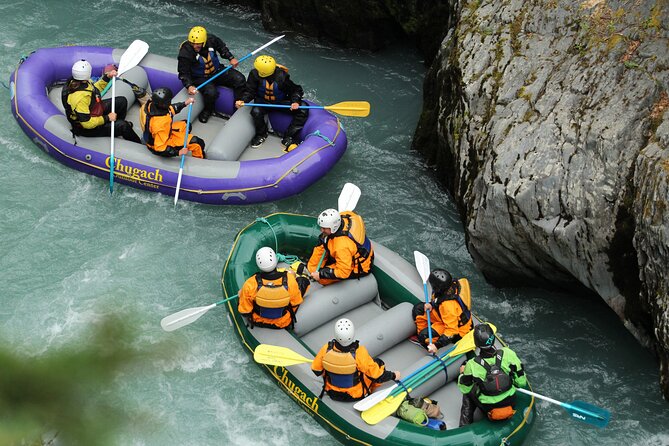
The third canyon is where the trip can shift from demanding to extreme. It contains multiple Class V rapids, and some groups are offered the chance to continue after the first two canyons. The additional section may involve a separate charge, so ask for the exact price before agreeing. A previous participant expected an extra $50 to $60 and found the final amount much higher.
I would treat the third canyon as an optional challenge, not an automatic part of the half-day. You may be thrilled by the first two canyons and still decide you have had enough. One participant chose not to continue because they were too cold and tired. Another group continued and called the added section the most exciting part of the day.
That range of reactions makes sense. Class V water can be thrilling for someone who is fit, comfortable with risk, and still focused. It can be a poor decision for someone who is shivering, anxious, or struggling to keep up with the paddle commands.
If you want the full three-canyon run, clarify three things before you enter the river: the additional price, how river conditions affect the route, and whether your group can stop after two canyons. Clear answers will prevent an unpleasant surprise at the end.
Getting back to warmth
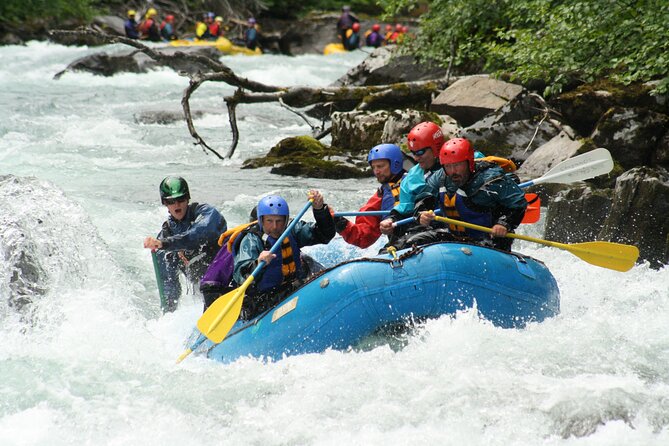
After the river section, you leave the water and ride by van back to the training facility. The activity ends where it began, which makes the outing easy to manage if you have parked there or brought an RV. RV parking is available.
Back at the facility, hot showers, hot beverages, and a hot tub provide a proper finish. These are not decorative extras on a cold-water trip. They help you recover after several hours in wet gear and moving water.
The photo option is another cost to consider. Photos are taken during the trip, but one previous price was $85 for a full USB drive and $25 for a single emailed image. If you care about having photographs, ask about current prices before the trip so you can decide with accurate information.
Is $195 a fair price?
At $195 per person, this is expensive compared with a short scenic float, but it is priced as a guided whitewater operation with specialized equipment, training, transport back to the start, and access to warm-up facilities.
The value is strongest if you want serious rapids without owning gear or arranging your own safety support. You receive a guide, helmet, dry suit, river shoes, and flotation device. You also get a small-group setting and the chance to attempt three canyons, conditions permitting.
The value is weaker if you mainly want Alaska scenery, wildlife, or a relaxed river ride. Much of your attention goes to paddling and staying in the raft. You may see forest, black bears, or deer, but wildlife is not guaranteed and is not the core purpose of the trip.
You should also budget mentally for possible add-ons. The third canyon may cost extra, and photos are not included in the listed price. Ask about both before you start.
Who should book this Six Mile River trip?
I would recommend it to fit adults, active teenagers aged 12 or older, and families who are comfortable with cold water and controlled risk. It is a good match if you want a physical activity with genuine whitewater rather than a quiet sightseeing trip.
You do not need prior rafting experience. The guide teaches you what to do, and the emphasis on instruction makes the outing possible for first-timers who are strong swimmers and in good shape.
I would not choose it for anyone with weak swimming ability, low fitness, a strong fear of cold water, or a preference for dry clothing. The practice swim is demanding, the dry suits may leak, and the third canyon can be very intense.
Book as far ahead as you can, since this activity is often reserved about 49 days before the date. You receive a mobile ticket, and confirmation is sent within 48 hours when space is available. Free cancellation is offered up to 24 hours before the start time. If poor weather forces cancellation, you can choose another date or receive a full refund.
Should you book it?
Book this trip if you want Alaska’s Six Mile River at full force and you are prepared to work for the thrill. The guides have earned strong praise for calm instruction and safe boat handling, and the three-canyon route offers a rare chance to move from Class IV water into Class V rapids in one outing.
Go in with realistic expectations. You may be wet despite the dry suit, cold despite the hot tub afterward, and too tired for the third canyon. Bring wool socks and dry clothes, ask about the extra charge, and treat the swim test as a serious requirement.
If that sounds like part of the appeal, the $195 price can be worthwhile. If it sounds miserable, choose a gentler river activity instead.
FAQ
Where does the rafting trip begin?
The trip begins at the Chugach Outdoor Center, located at 28069 Hope Highway in Hope, Alaska, near milepost 7.5 on the left side of the Hope Highway.
How long does the activity last?
The full experience lasts approximately four hours, including the orientation, rafting, and van transportation back to the training facility.
What is the minimum age?
The minimum age is 12. Children must be accompanied by an adult.
Do I need previous rafting experience?
No previous rafting experience is required. You must be physically fit, a competent swimmer, and able to pass the paddler’s practice swim.
What equipment is provided?
The operator provides a helmet, dry suit, river shoes, and personal flotation device. Hot beverages, hot showers, and hot tub access are also included.
Can I cancel for a full refund?
Yes. You can cancel at least 24 hours before the experience start time for a full refund. If poor weather causes the operator to cancel, you can receive a full refund or select another date.
Just added around the USA
- Wilderness: Denali National Park Class I-III Rafting Tour★ 4.5 · 25 reviews
- Westwater Canyon: Colorado River Class 3-4 Rafting from Moab★ 4.8 · 22 reviews
- Valdez: Keystone Canyon Whitewater Rafting Trip★ 4.8 · 6 reviews
- New River Gorge Whitewater Rafting, WV – Lower New Full Day★ 5.0 · 18 reviews
- Half Day New River Gorge Whitewater Rafting★ 5.0 · 22 reviews
- Lower Gauley Fall Rafting Special in WV★ 5.0 · 32 reviews
- Fall Upper Gauley Full Day Whitewater Rafting★ 5.0 · 2 reviews
- Full Day Fall Lower Gauley Rafting in West Virginia★ 5.0 · 2 reviews
White Water Rafting, compared.
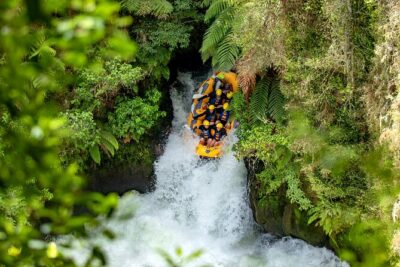
Rotorua Rafting: Kaituna River White Water Rafting & Free Sauna
Read our review →
Barron Gorge White Water Rafting from Cairns or Port Douglas
Read our review →
ATV Quad Bike & White Water Rafting Adventure
Read our review →
Rafting Rotorua: Kaituna River White Water Experience
Read our review →
White Water Rafting – Kaituna Cascades, The Originals
Read our review →
Other lists this trip is on