
Review · WHITE WATER RAFTING
Queenstown: Shotover River Whitewater Rafting Trip
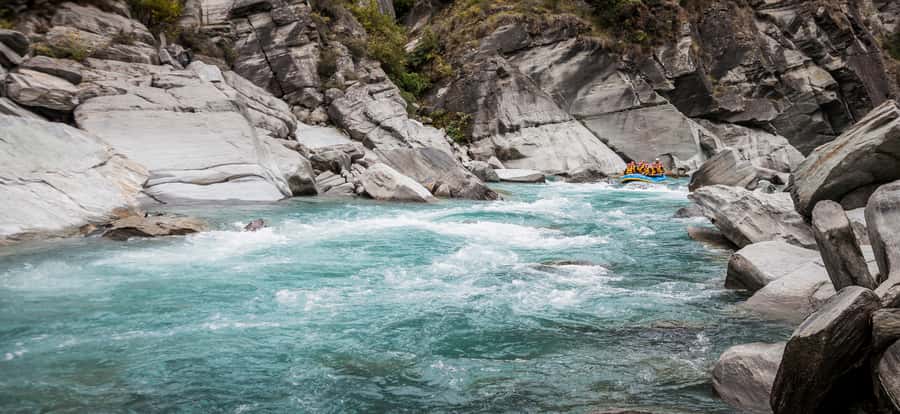
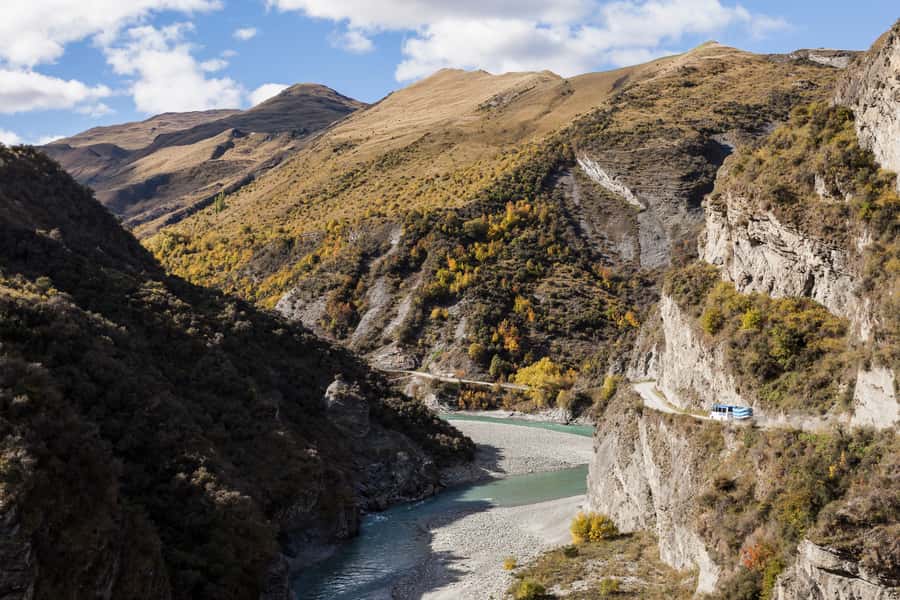
The wildest part of this trip may begin before you reach the river. The bus follows the old road into Skippers Canyon, with steep drops and tight turns beside rugged mountain country. Then comes the main event: six rapids, a 170-meter tunnel in total darkness, and a final blast through Cascade Rapid.
I like the mix of hard paddling and quiet river time. You get real thrills, but also stretches to look up at the canyon walls, cool off with a swim, and catch your breath. I also like the guides’ role. Muzz, Raju, Jess, Benj, Kai, and others are praised for calm instruction, good humor, and helping first-time rafters find their rhythm.
The main consideration is intensity. This is not a sightseeing float, and you must be comfortable in fast-moving water, able to swim, and willing to follow instructions closely. River conditions can change the feel of the rapids, too. One account found the water closer to Grade 2 to 3, while the advertised run includes Grade 4 to 5 rapids, so the challenge may vary by season and water level.
Key points at a glance
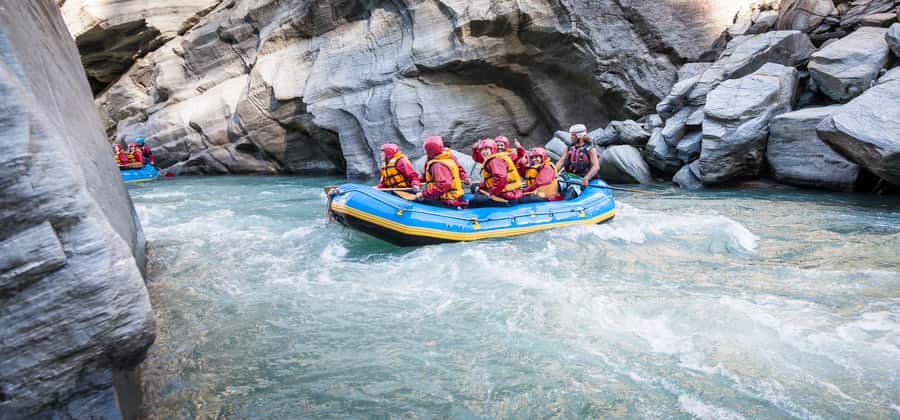
- The 170-meter Oxenbridge Tunnel: Paddle into a man-made tunnel with no daylight for part of the run.
- The Skippers Canyon drive: The road into the river is a memorable part of the outing, with sharp turns and dramatic drops.
- Six named rapids: Expect Aftershock, Squeeze, Toilet, Pinball, and Cascade, plus the tunnel section.
- Guided teamwork: Your guide teaches paddle technique, gives commands, and keeps the raft working as one unit.
- A proper cold-water finish: Calm sections allow time for a swim before the final rapid and return to base.
- A full four-hour outing: Wetsuit, rafting gear, transport from Arthurs Point, safety briefing, photography services, and a hot shower are included.
The journey from Arthurs Point into Skippers Canyon
Your meeting point is the Challenge Rafting base at 1 Arthurs Point Road, about a 10-minute drive from central Queenstown. Hotel pickup is not included, so you need to reach the base yourself. You can ask the operator about self-driving directly to the raft base.
The bus ride matters here. It is not simply a transfer from town to the water. You travel into Skippers Canyon on an old mining road, and the route can feel like an adventure before the raft even touches the river. One person described the road as the scariest part of the day, with many turns and a large drop beside the vehicle.
That makes the drive useful context for the river. Skippers Canyon is hard to reach by ordinary sightseeing vehicle, and rafting gives you a reason to enter it. Bring your camera for the bus ride only if the operator allows it before departure, since cameras, phones, selfie sticks, and bags are not permitted during the rafting activity.
More White Water Rafting in New Zealand
- Rotorua Rafting: Kaituna River White Water Rafting & Free Sauna
★ 5.0 · 1,952 reviews - White Water Rafting – Kaituna Cascades, The Originals
★ 5.0 · 1,274 reviews - Rafting Rotorua: Kaituna River White Water Experience
★ 4.9 · 1,274 reviews
Getting fitted for the river
At the river base, you change into the supplied wetsuit and receive your rafting equipment. Bring swimwear, a towel, and comfortable clothes. You will get wet, so avoid wearing anything you need to keep dry.
The guide then explains the raft, paddle commands, and safety procedures. The briefing may sound serious because it covers what can go wrong in moving water. That is useful rather than alarming. You need to know how to respond quickly if the raft shifts, someone falls out, or the guide calls for a change in paddling.
This is also where the trip becomes a team activity. You do not need previous rafting experience, but you do need to listen and work with the others in your raft. One participant described gaining confidence while practicing maneuvers early in the run, with the guide correcting paddle technique. That is exactly the sort of instruction that helps a beginner settle in.
The group can be large. One account referred to a group of 48, though that does not tell you how many people will be in each raft. Expect a social outing rather than a private one. The guide sets the tone, and the better guides turn a raft full of strangers into a coordinated paddling crew.
Six rapids, each with its own job
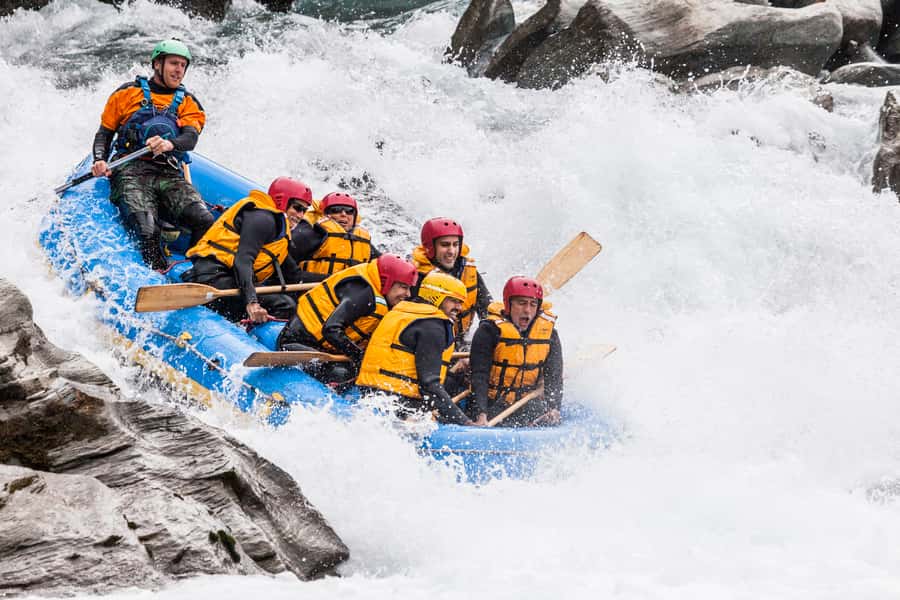
The first rapids give you time to learn how the raft responds. You will paddle when told, brace yourself, and follow the guide’s commands through the faster water. The named sections include Aftershock, Squeeze, Toilet, and Pinball.
Names like these tell you more about the mood than the exact shape of each rapid. You will not simply sit back and be carried along. The guide may ask you to paddle hard, stop, shift position, or hold on. The fun comes from doing your part while the river supplies the force.
The run alternates between active sections and calmer water. That rhythm is one of the trip’s strengths. A nonstop series of violent rapids would leave little time to enjoy the canyon, while a gentle float would not justify the rafting gear and safety briefing. Here, you get bursts of shouting and spray, followed by time to look around and recover.
Water levels affect the experience. One account found the run less challenging than expected, calling the rapids closer to Grade 2 to 3. Other accounts describe the water as thrilling and challenging, particularly after the tunnel. Treat the published Grade 4 to 5 description as a guide to the possible difficulty, not a promise that every departure will feel identical.
The Oxenbridge Tunnel is the signature moment
The most unusual section is the 170-meter Oxenbridge Tunnel. The raft enters a man-made passage cut through the canyon, and the daylight disappears. You paddle through darkness for a short but memorable stretch, with the sound of the water and the movement of the raft taking over.
This is not a long underground expedition. It is a compact feature within the river run, but it gives the trip a clear identity. Many rafting outings offer rapids and scenery. This one adds a tunnel that you experience from the water, in a raft, with no easy way to look ahead.
The tunnel also changes the pacing. After the open canyon and crashing water, the darkness creates a sudden break in what you can see. Then you emerge back into daylight and continue toward the final section. If you want a rafting trip with one unusual feature beyond the rapids, this is the strongest reason to choose the Shotover River.
Same rivers, a different sort of day out:
- Waitomo Caves: Labyrinth Black Water Rafting Experience
★ 4.9 · 1,673 reviews - Rafting Rotorua Kaituna White Water Rafting | Kaitiaki Adventures
★ 5.0 · 759 reviews - Rotorua Rafting: Kaituna River Rafting Experience-Free Sauna
★ 4.9 · 401 reviews - Kaituna River White Water Rafting from Rotorua
★ 5.0 · 388 reviews
Calm water, canyon views, and a possible swim
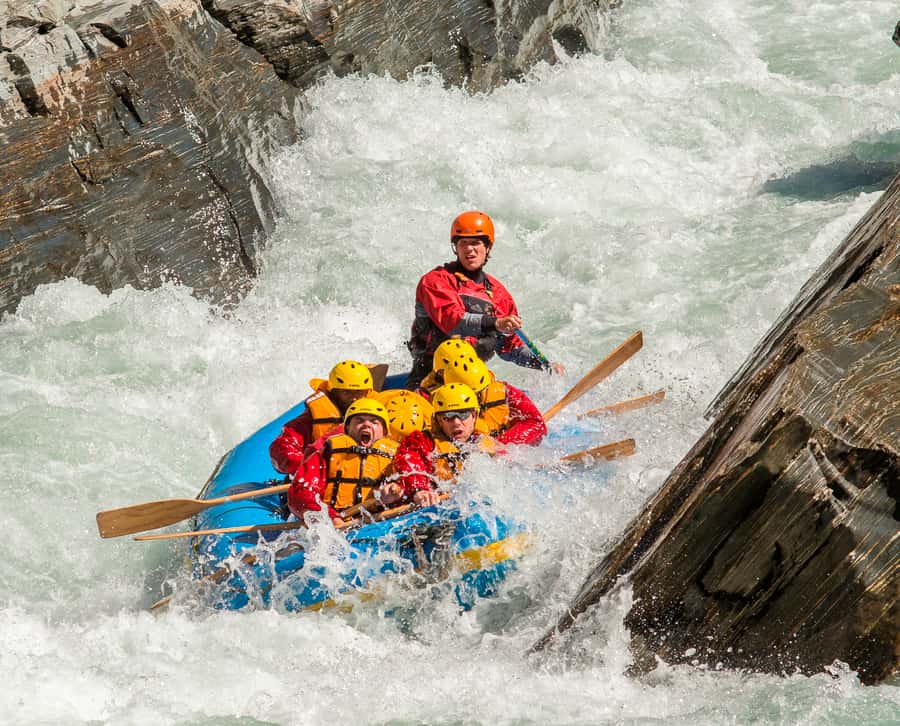
The quieter sections are not filler. They give you a chance to notice the rock walls and rough natural setting that you could not appreciate while concentrating on a rapid. The river runs through country that is difficult to reach by road, so the raft provides a close view of it without turning the day into a standard coach tour.
If conditions and the guide allow, you can swim in a calm section of the river. This is a guided decision, not an invitation to jump into any part of the Shotover. The guide chooses a suitable area, and you should follow that advice.
The swim can be a welcome reset after the early rapids. You are already wet from the river, but the cold water adds another jolt. If you dislike cold water, you can relax in the raft or sun yourself instead. The important point is that the trip has breathing room between the harder sections.
Cascade Rapid brings the run home
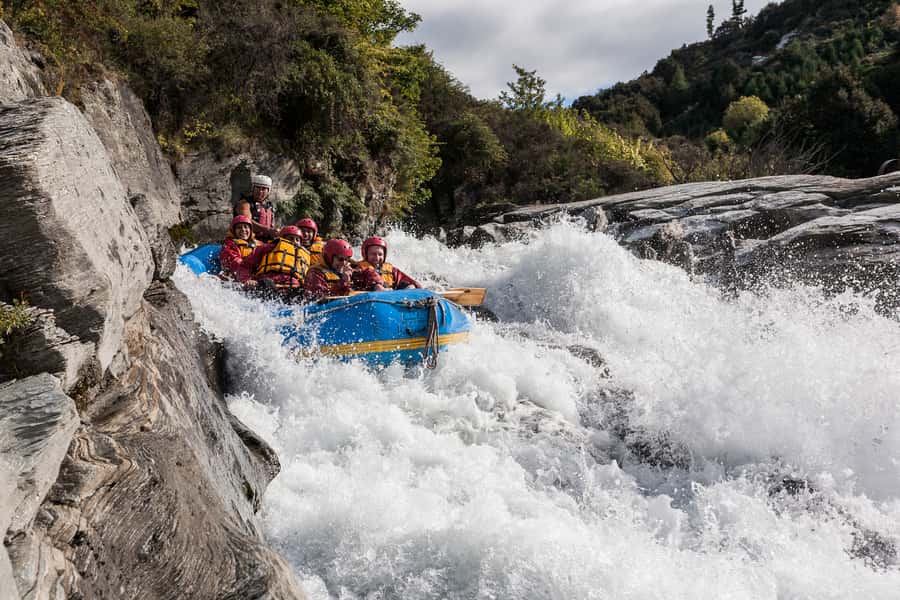
After the tunnel and calmer stretches, the trip finishes with Cascade Rapid. It is described as the challenging final rapid, and several accounts single out the post-tunnel section as especially exciting.
A final rapid works well here because you have had time to learn the commands and adjust to the raft. You are not facing the last major challenge as a complete beginner. By this point, you know how your guide communicates and how the crew responds when the pace picks up.
Once the river run ends, you return to the base for a hot shower. That small detail matters. A wetsuit keeps you protected in the cold water, but you will appreciate warm water and dry clothes after several hours outside.
Guides make the difference
The guide is the key variable on this trip. Names praised in the feedback include Muzz, also called Maria, Raju, Jess, Benj, Kai, Gabe, Chris, Mark, and Mr Gee. The repeated pattern is clear: guides help people paddle properly, keep the group engaged, and make the experience feel exciting without losing sight of safety.
That balance matters for beginners. A guide who gives only stern commands can make the trip feel tense. A guide who treats everything as a joke can undermine confidence. The best accounts describe leaders who were patient, friendly, skilled, and good at building teamwork.
You should still expect to do physical work. Rafting requires paddling, bracing, and holding your position. One account praised the activity for requiring skill and energy, not just sitting in a boat while the current does everything. If you want a purely passive scenic ride, choose a different river outing.
What the $178 price includes
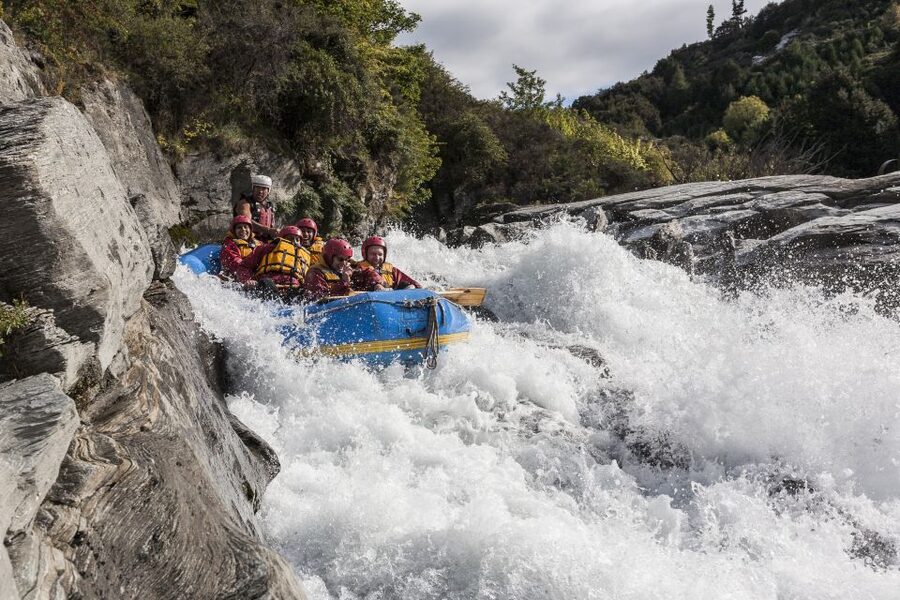
At $178 per person, this is not a cheap add-on, but the price covers more than the time spent on the river. You get transport from the Arthurs Point base, a wetsuit, rafting equipment, a professional guide, a safety briefing, the rafting trip, and a hot shower afterward.
The transport adds real value because the road into Skippers Canyon is part of the experience. You are not paying only for six rapids. You are also paying for access to a remote-feeling river section, equipment you do not need to rent separately, instruction, and the operator’s safety systems.
Professional photography services are included, but set your expectations carefully. One person wanted more photos of the action and surroundings. Since cameras and phones are not allowed on the river, you cannot rely on your own snapshots. If having strong action photos matters to you, ask Challenge Rafting what photography is available before you go and whether images cost extra.
Food and drinks are not included. Plan to eat before or after the trip, and do not bring drinks into the vehicle. Smoking, vaping, alcohol, drugs, and intoxication are not allowed.
Who should book this rafting trip?
This outing suits you if you want an active half-day from Queenstown and enjoy working as part of a group. It is especially good for first-time rafters who want a guide to teach the basics, rather than arranging a self-guided or independent river experience.
You should be water-confident and able to swim in fast-moving water. The minimum age is 13, and anyone under 17 must be accompanied by a guardian. Rafters under 18 need a waiver signed by a guardian.
The activity is not suitable for non-swimmers, wheelchair users, people with mobility impairments, pregnant women, people with heart problems, or anyone taking heart medication. There is also a weight range: at least 40 kilograms and no more than 120 kilograms. Every participant must sign a waiver, and rafting carries a degree of risk even with professional guides and safety equipment.
The operator can refuse participation or change a trip if river, road, weather, or group-size conditions make it unsafe. The activity runs in rain or shine, but that does not mean every departure operates regardless of conditions.
Practical tips for a better day
Wear swimwear under the wetsuit and bring a towel for the end. Comfortable clothing is useful before and after the river, and you should leave bags, phones, cameras, selfie sticks, and video equipment behind.
Arrive ready for a wet, physical activity. Do not count on keeping your clothes dry, and do not bring anything valuable onto the raft. The rule against phones and cameras is sensible, but it also means you should take your scenic photographs before changing into rafting gear or after returning to the base.
Listen closely during the briefing, even if you have rafted before. The guide’s commands and procedures may differ from those used elsewhere. Stay alert, paddle when asked, and tell the guide if you are unsure about a maneuver.
The booking terms are flexible: you can cancel up to 24 hours before departure for a full refund, and you can reserve now and pay later. Starting times vary, so check availability for your date.
Should you book it?
Book this trip if you want more than a scenic Queenstown excursion. The Skippers Canyon road, six rapids, dark tunnel, possible swim, and Cascade finish create a varied four-hour outing. The guides receive especially strong praise for making beginners feel capable while keeping the activity focused on safety.
Think twice if you dislike cold water, group activities, physical effort, or uncertainty about river conditions. The rapids may feel gentler than expected on one day and much more forceful on another, and you cannot bring your phone or camera onto the river.
For an active Queenstown day at $178, I think the value is solid, especially because transport, gear, instruction, and a hot shower are included. Choose it for the combination of remote canyon scenery and genuine rafting, not for a quiet float or guaranteed high-intensity rapids.
FAQ
Where do I meet for the rafting trip?
Meet at the Challenge Rafting base at 1 Arthurs Point Road, Arthurs Point, about a 10-minute drive from central Queenstown. Hotel pickup and drop-off are not included.
How long does the experience last?
The activity lasts four hours, including transport to the river, preparation, the safety briefing, rafting, and the return to base.
What rapids will I raft through?
The route includes six rapids, including Aftershock, Squeeze, Toilet, Pinball, and Cascade. It also includes the 170-meter Oxenbridge Tunnel.
What is included in the price?
The $178 price includes the whitewater rafting trip, wetsuit, rafting equipment, transport to the river, safety briefing, professional photography services, and a hot shower.
What should I bring?
Bring swimwear, a towel, and comfortable clothes. You will get wet during the activity.
Who cannot take part?
The activity is not suitable for children under 13, non-swimmers, pregnant women, wheelchair users, people with mobility impairments, people with heart problems, people taking heart medication, anyone under 40 kilograms, or anyone over 120 kilograms. Participants must be water-confident and able to swim in fast-moving water.
Just added around New Zealand
- Queenstown Kawarau River Whitewater Rafting★ 5.0 · 57 reviews
- Half Day, Grade 5, White Water Rafting on the Rangitikei River★ 5.0 · 66 reviews
- Rotorua Sledging White Water Sledging | Kaitiaki Adventures★ 5.0 · 90 reviews
- Rangitaiki River White Water Rafting from Rotorua★ 5.0 · 96 reviews
- Shotover River Rafting Trip from Queenstown★ 5.0 · 115 reviews
- Queenstown: Kawarau River Rafting and Jet Boat Ride★ 4.8 · 145 reviews
- Queenstown Kawarau River Rafting and Jet Boat★ 5.0 · 158 reviews
- The Hobbit Barrel Run Rafting Tour on the Pelorus River★ 5.0 · 167 reviews
White Water Rafting, compared.
Rotorua Rafting: Kaituna River White Water Rafting & Free Sauna
Read our review →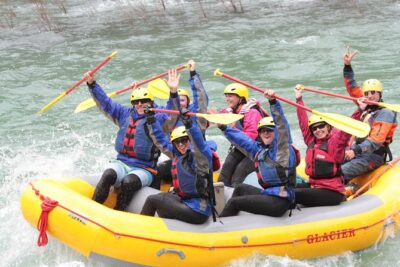
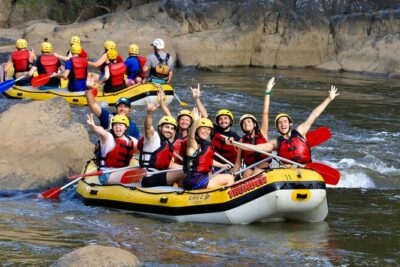
Barron Gorge White Water Rafting from Cairns or Port Douglas
Read our review →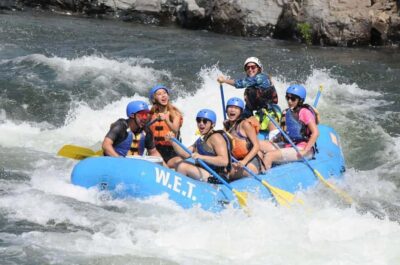
ATV Quad Bike & White Water Rafting Adventure
Read our review →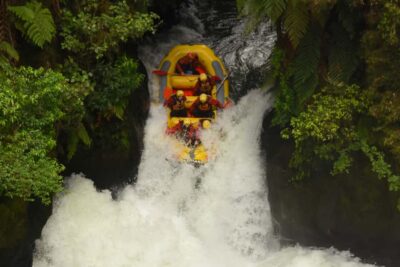
Rafting Rotorua: Kaituna River White Water Experience
Read our review →
White Water Rafting – Kaituna Cascades, The Originals
Read our review →
Other lists this trip is on