
Review · POKHARA RAFTING TOURS
1 Day Rafting Upper Seti River
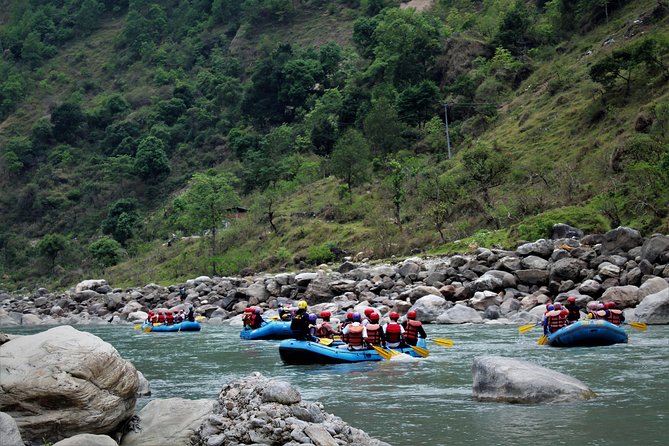
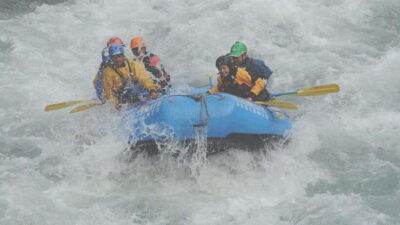
The Upper Seti packs a proper burst of white-water action into a half-day outing from Pokhara. After a short drive, you get about 90 minutes of continuous rafting through Class III and stronger rapids, with the Annapurna range in view. It is a neat way to trade a few quiet hours by the lake for cold water, teamwork, and a bit of controlled chaos.
I like two things here: the quick access from Pokhara and the mix of mountain scenery with real rapids. You do not need to arrange a full expedition or spend a whole day on the road. The main consideration is the short format. At roughly three and a half hours door to door, it gives you a taste of rafting rather than a long river journey.
Key points
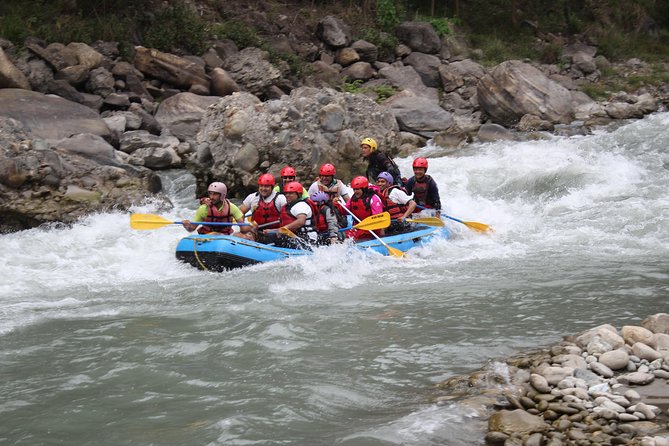
- Class III and stronger rapids: Expect an active ride that calls for paddling and a moderate level of fitness.
- Only about 30 minutes from Pokhara: The river is close enough to fit around other sightseeing plans.
- Annapurna views from the water: The mountain range adds a memorable setting to the rafting run.
- A refreshing river-jump stop: You may get a chance to swim or jump into the water, so bring dry clothes.
- Guide-led navigation: You can focus on paddling while the guide manages the route and safety.
- Small maximum group: The outing is limited to 16 people, which keeps the activity fairly manageable.
From Lakeside to the Upper Seti in 30 minutes
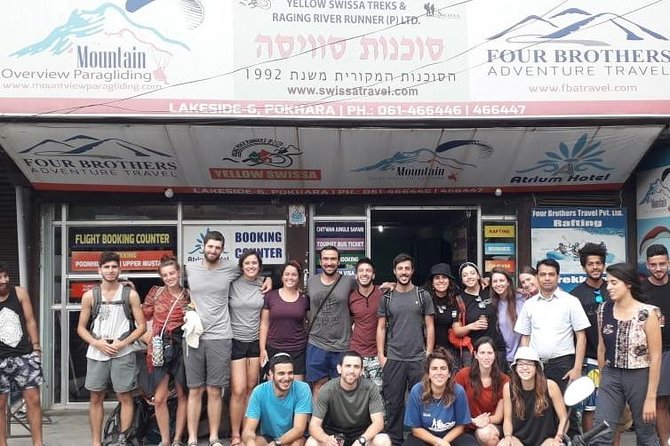
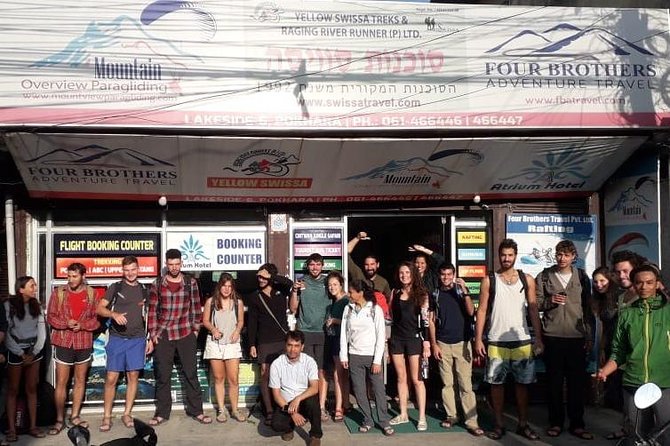
Your afternoon begins at 1:15 pm at Mountain Overview Paragliding on Baidam Road, with ticket redemption at Yellow Swissa Adventure Travel & Treks in Lakeside-6. The precise meeting arrangement matters, so allow enough time to find the office and confirm where the group is gathering.
The trip to the river takes about 30 minutes. That is one of the strongest practical reasons to choose this outing. Pokhara has plenty of outdoor activities, but some require a long transfer before the main event begins. Here, much of your afternoon is spent on the river rather than in a vehicle.
The activity ends back at the meeting point. That makes planning easier if you have dinner, a lakeside walk, or another Pokhara activity afterward. Still, I would avoid booking anything tight immediately after rafting. Road conditions and river activities can take longer than the advertised estimate, and you will want time to change into dry clothes.
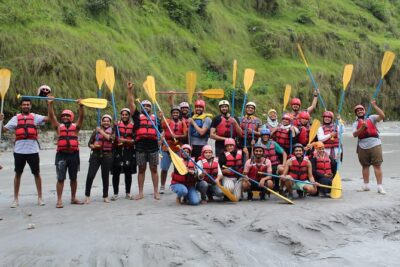
The maximum group size is 16 people. That is not a private trip, but it is small enough to keep the group from feeling unwieldy. Your guide handles navigation, allowing you to concentrate on paddling, listening to instructions, and staying in rhythm with the rest of the raft.
More One-Day Trips in Nepal:
- Himalayan White Water Rafting Day Trip from Kathmandu
★ 4.0 · 22 reviews - 1 Day Trishuli Rafting from Pokhara
★ 5.0 · 4 reviews - White Water River Rafting – 1 Day
★ 4.3 · 3 reviews
What Class III and stronger rapids mean for you
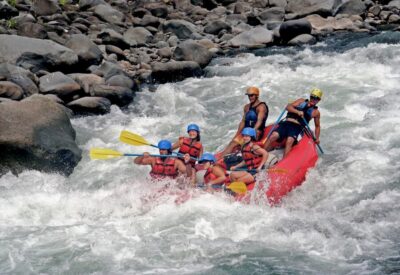
This is not a gentle float. The run includes Class III and stronger rapids, so you should expect splashing, movement, and sections that require active paddling. You do not need to know how to steer the raft yourself, since the guide takes care of navigation, but you do need to take part.
A moderate level of physical fitness is required. That does not mean you need specialist rafting experience. It does mean you should be comfortable paddling, bracing yourself, following instructions, and spending a sustained period on moving water.
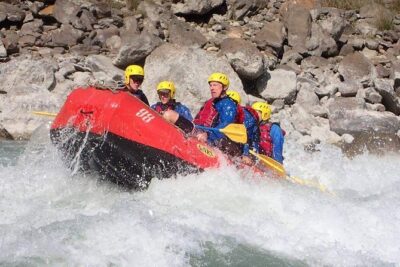
The supplied equipment includes a life jacket and helmet. Those are basic but essential pieces of river gear, especially when the water is moving fast and the raft is bouncing through rapids. Put them on properly and listen carefully to the safety briefing before the raft leaves shore.
The most important skill is not strength. It is paying attention. When the guide tells you to paddle, stop, or adjust position, act quickly. The guide has the best view of the river ahead, while you are mainly focused on the water immediately around the raft.
If you are hoping for a calm sightseeing cruise, this is the wrong choice. If you want a compact activity with a clear dose of adrenaline, the rapids are the main reason to book.
The Annapurna range from a moving raft
The Annapurna mountain range is the visual reward between the rapids. From the water, you get a different angle than from Pokhara’s streets or lakeside cafés. The mountains give the trip a strong sense of place, rather than making it feel like a generic rafting session that could happen anywhere.
The view is also part of the pacing. Rapids demand your attention, then calmer moments give you time to look up. Keep your eyes open during those quieter stretches, but do not let photography distract you from the guide’s instructions or from holding on securely.
The experience does not provide a long list of sightseeing stops. Its mountain-view element is built into the river run itself. That is worth understanding before booking. You are not taking a dedicated Annapurna tour with extended viewpoints. You are rafting with the mountains as a backdrop.
This combination works especially well if you have already spent time around Pokhara and want to see the area from a more active angle. It also suits anyone who wants one memorable outdoor activity without giving up an entire day.
The river jump and the case for dry clothes
One of the outing’s best small touches is the break when you can jump into the water. It offers a change of pace after the rapids and a chance to cool off properly. If you like swimming and do not mind getting soaked, this may be the most relaxed part of the trip.
It is also the clearest practical warning: bring a complete change of clothes. You will already be exposed to spray and splashes during the rafting, and the jump makes wet clothing nearly certain. A towel and a way to keep spare clothes dry would be sensible, although only changing clothes is specifically confirmed.
Do not treat the swim as guaranteed in every circumstance. River conditions and the guide’s judgment control how the stop works. The key point is to prepare as if you will get wet from head to toe.
This break adds value to the short route. Without it, the outing would be almost entirely a fast run through rapids. With it, the experience has a simple rhythm: drive to the river, paddle hard, pause for a refreshing splash, and finish back in Pokhara.
More Rafting Tours in Nepal:
- Upper Seti: Half-Day White Water Adventure
★ 5.0 · 87 reviews - Pokhara: Half Day Upper Seti Rafting & Paragliding adventure
★ 4.8 · 34 reviews - 1 Night 2 Days Trishuli River Rafting Trip From Kathmandu With Private Car
★ 5.0 · 14 reviews - Pokhara: Upper Seti River Rafting Day Tour
★ 4.9 · 11 reviews
How the 3.5-hour schedule works
The full activity lasts about three hours and 30 minutes. Around 30 minutes is used for the drive from the office to the river, and roughly 1.5 hours is spent rafting non-stop through the rapids. The remaining time covers getting ready, organizing the group, and returning to the meeting point.
That schedule is both a strength and a limitation. I like it for visitors with a busy Pokhara plan. You can fit rafting into an afternoon without sacrificing an entire day of sightseeing. The 1.5-hour river section is long enough to feel like a real activity, not just a quick splash.
The drawback is that anyone seeking an extended rafting journey may find it too brief. The route is designed as a compact introduction to the Upper Seti, not a full-day river expedition. The description of the outing is quite clear on this point, so set your expectations accordingly.
The 1:15 pm start gives the day a late-afternoon shape. Check the local time carefully, arrive ready, and avoid assuming that a relaxed lunch will leave plenty of spare time. The meeting point is in Pokhara’s Lakeside area, but the rafting itself begins after the transfer.
What the guide does, and what you do
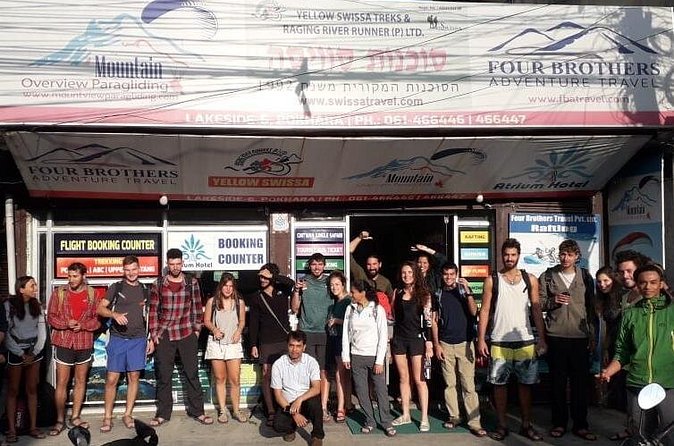
Your guide is responsible for navigation and safety, which is especially important on Class III water. You can focus on the paddle, the commands, and your position in the raft instead of trying to read the river alone.
The guide’s role also matters if you feel nervous. The activity is exciting, but you are not expected to manage it without support. Friendly, reassuring guidance can make a major difference when the raft approaches a faster section or when the water starts moving more sharply than expected.
You should still be an active participant. The guide cannot paddle the raft alone, and the experience is more enjoyable when everyone works together. Expect to listen, respond, and keep paddling when asked.
No individual guide names are provided, so I would not choose this trip based on a particular staff member. Choose it for the guide-led format, the safety equipment, the short transfer, and the river setting.
Is $45 a fair price?
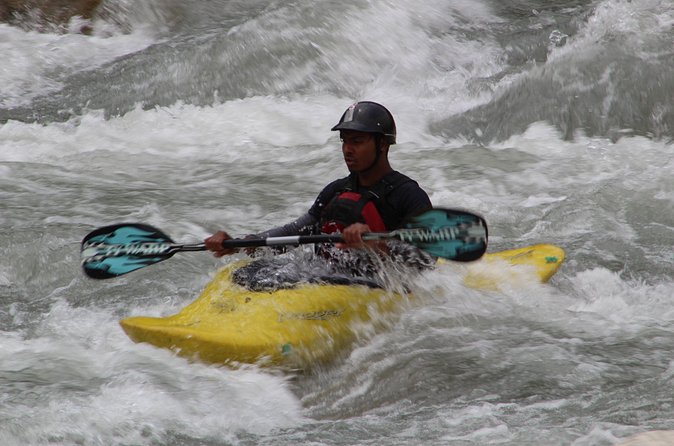
At $45 per person, the outing offers reasonable value if you want a guided activity with equipment and transport from central Pokhara. The cost covers the rafting experience, life jacket, helmet, guide support, and the trip to and from the river. For a visitor who would otherwise need to arrange each part separately, that simplicity has real worth.
The value depends on how you measure time. You receive about 1.5 hours on the water, not a full day of rafting. Someone focused on the amount of river time may find the price less attractive than a longer expedition. Someone with only one free afternoon may see it differently, since the short format lets you add an adventure without rearranging your whole Pokhara stay.
The Annapurna views also help make the price feel more worthwhile. You are not paying only for rapids. You are combining a guided outdoor activity, mountain scenery, safety gear, and transport in one package.
Because the group can reach 16 people, this is not the choice for a private or highly personalized river trip. It is better suited to people who want a social, organized outing at a moderate price.
Who should book this rafting trip?
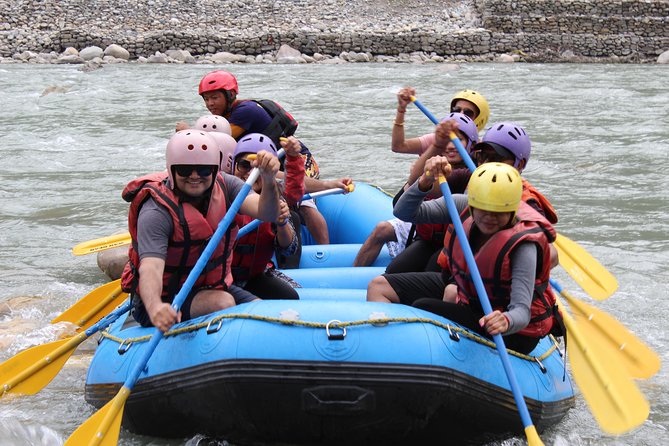
I would recommend it to you if you want a first or intermediate rafting experience and have a moderate fitness level. The guide handles the route, while the Class III and stronger rapids provide enough action to keep the outing exciting.
It is also a good match for:
- Couples or friends looking for an active afternoon in Pokhara
- People who want mountain scenery without a long trek
- Visitors with only part of a day available
- Anyone who enjoys swimming, splashing, and physical activity
- Adventurous families only if every participant meets the stated fitness requirement
I would think twice if you dislike cold water, cannot take part in paddling, or want a slow scenic float. You should also consider a longer rafting trip if the river itself is the main focus of your Nepal holiday.
The experience requires good weather. If poor weather cancels the outing, you can receive a different date or a full refund. The activity also requires a minimum number of participants, so a cancellation for that reason brings the same choice of another date or a refund.
Free cancellation is available up to 24 hours before the start time. Inside that window, the amount paid is not refunded and changes are not accepted.
My verdict on the Upper Seti afternoon run
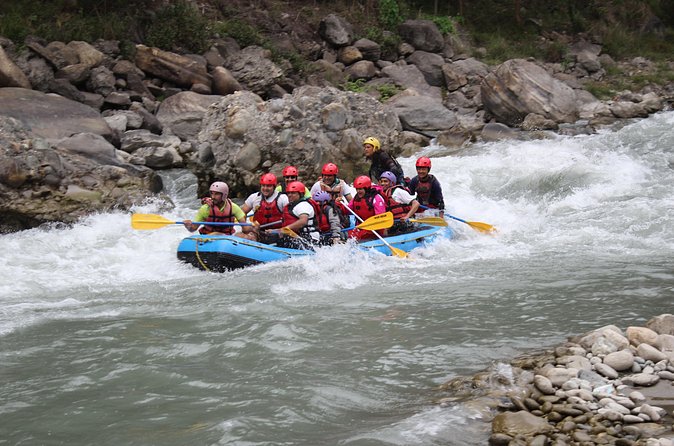
This is a compact, sensible way to add white-water action to a Pokhara stay. The best parts are clear: Class III rapids, a guide-led format, Annapurna views, and a refreshing river stop, all reached after a short drive.
Its weakness is also clear: the rafting section lasts about 1.5 hours, so serious river enthusiasts may want more time on the water. For most people seeking a memorable half-day activity, that shorter format is useful rather than disappointing.
Book it if you want an active break from Pokhara’s lakeside routine and are happy with a guided group experience. Skip it if you need a full-day expedition or prefer to keep your clothes dry. Bring spare clothing, arrive on time, and expect to paddle hard, get wet, and enjoy a lively afternoon on the Upper Seti.
FAQ
Where does the rafting trip start?
The activity starts at Mountain Overview Paragliding on Baidam Road in Pokhara. Ticket redemption is at Yellow Swissa Adventure Travel & Treks in Lakeside-6.
What time does the activity start?
The stated start time is 1:15 pm.
How long does the experience last?
The full experience lasts about three hours and 30 minutes. The drive to the river takes roughly 30 minutes, and the rafting portion lasts about 1.5 hours.
What level of rapids should I expect?
The rafting includes Class III and stronger rapids. A moderate level of physical fitness is required.
Is safety equipment included?
Yes. A life jacket and helmet are included, and an experienced guide handles navigation.
What happens if bad weather cancels the trip?
You will be offered a different date or a full refund if poor weather causes the activity to be canceled.
Just added around Nepal
- White Water River Rafting – 1 Day★ 4.3 · 3 reviews
- Paragliding Trip with River Rafting★ 5.0 · 2 reviews
- 1 Day Trishuli Rafting from Pokhara★ 5.0 · 4 reviews
- 1 day Trishuli river rafting★ 5.0 · 2 reviews
- Kathmandu Pokhara & Chitwan Tour with Rafting -8 Days★ 5.0 · 2 reviews
- Trishuli Rafting★ 5.0 · 4 reviews
- A Day Rafting Tour to TRISHULI RIVER★ 3.5 · 3 reviews
- Trishuli River Rafting Day Trip From Kathmandu by Private Car★ 4.5 · 2 reviews
Pokhara Rafting Tours, compared.
Half Day Upper Seti Rafting & Paragliding adventure
Read our review →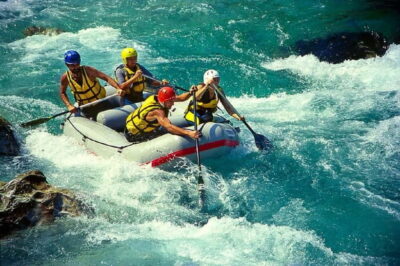
Paragliding and Rafting Adventure with Transfers
Read our review →
Other lists this trip is on